Highline Public Schools
15675 Ambaum Blvd. SW, Burien, WA, 98166
Budget Recommendation
2026-2027
Prepared by:
Business Services Department
Organizational Section
Strategic Plan
Our Promise
Every student in Highline Public Schools is known by name, strength, and need, and graduates prepared for the future they choose.
Strategic Plan
Living our Promise, our three-year strategic plan, will guide us towards challenging, equitable learning. We have four big goals:
Culture of Belonging: A culture where all students and staff feel welcome, valued and safe.
Innovative Learning: Academic experiences that engage, empower and challenge every student.
Bilingual and Biliterate: Multicultural skills that enable students to live, work, and communicate across cultures.
Future Ready: Students explore possibilities and develop mindsets that prepare them for a changing future.

Priority Areas
Our Strategic Plan goals define the outcomes we want for every student. Our Priority Areas focus on the specific work happening now to reach those goals. The goals set the long-term direction, while the priority areas guide day-to-day action across our schools. Together, they keep our work aligned and focused on student success.
Inclusion: Ensure students of all abilities and needs can learn and participate together in the same classrooms and school activities.
Literacy and Language: Improve literacy and language by integrating reading and writing across all subjects—not just in English Language Arts.
Student Supports: Provide individualized support to all students—academic, behavioral and emotional—to help each student build their strengths and thrive.
Secondary Redesign: Redesign parts of the secondary experience to make learning more relevant, rigorous and connected to each student’s future.
Organizational Section
School Board
The Highline Public Schools Board of Directors is made up of five elected members responsible for oversight and governance of the district's operations.
Board of Directors (Policy 1000)
Legal Status
The board of directors of the Highline School District is the corporate entity established by the state of Washington to plan and direct all aspects of the district's operations to the end that students shall have ample opportunity to achieve their individual and collective learning needs.
The policies of the board define the organization of the board and the manner of conducting its official business. The board's operating policies are those that the board adopts from time to time to facilitate the performance of its responsibilities.
Organization
The corporate name of this school district is Highline School District No. 401, King County, state of Washington. The district is classified as a first-class district and is operated in accordance with the laws and regulations pertaining to first-class districts.
In order to achieve its primary goal of preparing students for college, career, and citizenship, the board shall exercise the full authority granted to it by the laws of the state. Its legal powers, duties and responsibilities are derived from state statute and regulation. Sources such as the school code (Title 28A RCW), attorney general's opinions and regulations of the state board of education (Title 180 WAC) and the state superintendent of public instruction (Title 392 WAC) delineate the legal powers, duties and responsibilities of the board.
Number of Members and Terms of Office
The board shall consist of five members, elected by ballot by the registered voters of the district. Except as otherwise provided by law, board members shall hold office for terms of four years and until re-election or their successors are elected and qualified. Terms of board members shall be staggered as provided by law.
Newly-elected directors shall take office at the first official meeting of the board of directors after the election results have been certified by the county auditor. Prior to beginning their term, directors shall take and subscribe to an oath of office.

Joe Van, President, District 3
Joe Van is a 1995 graduate of Tyee High School, holds a degree in Administration of Justice from Highline College and is a graduate of the Des Moines Police Reserves Academy.
He previously worked at Owens and Minor, a global healthcare distributor based in Richmond, Virginia, where he led nationwide teams producing surgical kits. He also has experience as a senior warehouse manager for a local pharmaceutical company and in supply chain management.
Joe is active in a number of civic activities and is a soccer coach and referee. He lives in SeaTac with his wife, Leslee, also a Tyee graduate. Their three children are also Tyee alumni. Joe’s parents came to the U.S. from Vietnam, and Joe speaks fluent Vietnamese.
Angelica Alvarez, District 2
Angelica Alvarez was born and raised in San Luis, Arizona to migrant field workers, and she worked in the fields alongside her family most of her childhood. Following high school graduation, Angelica worked ten years at the Merced County Office of Education before moving to Burien to start a bilingual church with her husband.
Angelica holds a bachelor’s degree in education from Goddard College and a master’s in educational leadership and administration from Eastern Washington University. She is employed by the Puget Sound Educational Service District as a director of student and family centered improvement initiatives. She previously worked for an agency dedicated to promoting equity for children, building community stability, and encouraging school readiness and for the non-profit Child Care Resources. Angelica has been a trained community response team member since 2006, serving SeaTac, Burien, and Normandy Park.
Angelica is a strong advocate for all children. She lives in Burien with her husband and is a fluent Spanish speaker.
Stephanie Tidholm, Vice President, District 1
Stephanie Tidholm is a first-generation college graduate and holds an associate’s degree in psychology from South Seattle College and is studying for a bachelor’s degree in psychology at the University of Washington.
Stephanie brings her experience working as a social worker and substance abuse counselor and her passion for community and advocacy. Stephanie serves on several boards and committees supporting at risk youth, marginalized communities and the unhoused.
Stephanie lives in White Center with her two sons, who attend Highline schools and their sweet dog, Zhenola. Her daughter is a college student.
Dr. Damarys Espinoza, District 4
Dr. Damarys Espinoza brings more than 20 years of experience as an educator and organizational leader, with a focus on public health, equity and systems change.
She serves as Chief Equity and Policy Officer at Mary’s Place, teaches at the University of Washington, and co-leads a consulting business that supports nonprofit organizations.
Dr. Espinoza lives in Des Moines with her partner and three young children.
Blaine Holien, District 5
Blaine Holien is a first-generation college graduate. He studied political science and economics at the University of Washington.
He spent several years in sales, eventually advancing to a district manager role. He recently stepped away from his career to spend more time with his family.
He is married to a Highline educator and enjoys skiing, swimming and traveling with his family.
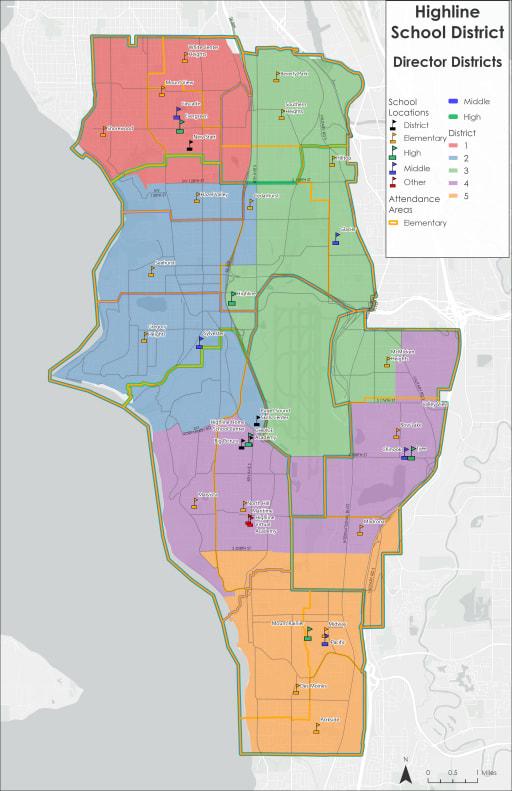
District 1 Schools
| School |
|---|
| Cascade Middle School |
| Evergreen High School |
| Innovation Heights Academy |
| Mount View Elementary |
| Shorewood Elementary |
| White Center Heights Elementary |
District 2 Schools
| School |
|---|
| Cedarhurst Elementary |
| Gregory Heights Elementary |
| Hazel Valley Elementary |
| Puget Sound Skills Center |
| Seahurst Elementary |
| Sylvester Middle School |
District 3 Schools
| School |
|---|
| Beverly Park Elementary |
| Highline High School |
| Glacier Middle School |
| Hilltop Elementary |
| McMicken Heights Elementary |
| Raisbeck Aviation High School |
District 4 Schools
| School |
|---|
| Big Picture |
| Bow Lake Elementary |
| Chinook Middle School |
| CHOICE Academy |
| Highline Virtual Academy |
| Madrona Elementary |
| Maritime High School |
| Marvista Elementary |
| North Hill Elementary |
| Tyee High School |
| Valley View Early Learning Center |
District 5 Schools
| School |
|---|
| Des Moines Elementary |
| Midway Elementary |
| Mount Rainier High School |
| Pacific Middle School |
| Parkside Elementary |
Organizational Section
School Board Zone Map
Organizational Section
Cabinet
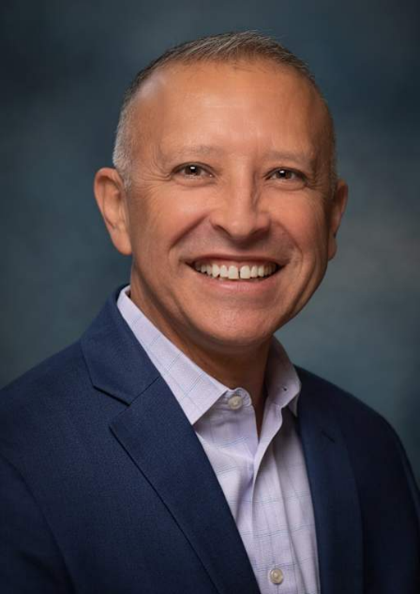
Dr. Ivan Duran – Superintendent
Dr. Ivan Duran is a proud product of public education. He was born and raised in Denver, Colorado. An early passion for reading and learning sparked his interest in being an educator. He has served over 30 years in public education, most recently as the Chief of Acceleration and Recovery for the Renton School District.
Dr. Duran previously served as superintendent for the Bellevue School District. As superintendent, Dr. Duran led with a focus on racial equity and inclusion, creating systems to support academic, social-emotional, and behavior development for all students.
Prior to Bellevue, Dr. Duran was deputy superintendent of the Dallas Independent School District and assistant superintendent for elementary education for Denver Public Schools. He has also served as a principal supervisor, director of instructional technology, principal, assistant principal, and teacher.
Dr. Duran’s core values include a passionate commitment to educational equity, dedication to continuous improvement aimed at results, and a collaborative and transparent leadership style. He holds a doctorate in Education Leadership and Policy Study from the University of Denver, a master's degree in Curriculum and Instruction from the University of Colorado, and a bachelor’s degree in Elementary Education from Metropolitan State University of Denver.
The Superintendent's Cabinet
The Superintendent's Cabinet is the team that oversees the way our strategic plan and other guiding principles are put into action. Each person in the cabinet has an area of strength that corresponds to the various demands of running a school district.

Organizational Section
Administrative Directory
District Administration
The District's Organizational Charts can be found at https://www.highlineschools.org/about/district-information/organizational-charts
| Title | Administrative Staff Name |
|---|---|
| Superintendent | Dr. Ivan Duran |
| Deputy Superintendent | Dr. Jenniffer Reinig |
| Associate Superintendent | Dr. Steve Grubb |
| Assistant Superintendent | Kisa Hendrickson |
| Chief Communications Officer | Tove Tupper |
| Chief Policy & Strategy Officer | Holly Ferguson J.D. |
| Chief Transformation & Innovation Officer | Teshon Christie |
| Chief Financial Officer | Jackie Bryan |
| Chief of Staff | Erinn Bennett J.D. |
| Executive Director - Instructional Leadership | Andrew Benitez |
| Executive Director - Instructional Leadership | Bernard Koontz |
| Executive Director - Instructional Leadership | Katie Virga |
| Executive Director - Instructional Leadership Elementary | Vacant |
| Executive Director - Instructional Leadership Elementary | Kevin King |
| Executive Director - Instructional Leadership Secondary | Omar Crowder |
| Executive Director - Instructional Leadership Secondary | Gilbert Parsons |
| Executive Director - Foundational Support | Clare Gloede |
| Executive Director - Technology Services | Katie Luksan |
| Executive Director - Human Resources | Sara Baker |
| Director - Language Learning | Adina Thea |
| Director - Inclusion | Alex Haas |
| Director - Communications | Amanda Lecompte |
| Director - Controller | Andrew Burgess |
| Director - Professional Learning | Deena Russo |
| Director - Secondary Success & College Readiness | Janet Blanford |
| Director - Facilities Services | Jason Smith |
| Director - Secondary Instruction | Laura Schneider |
| Director - Budget | Lauren McAlister |
| Director - Nutrition Services | Lisa Johnson |
| Director - Digital Learning Library | Meghan Terwillegar |
| Director - Social Emotional Learning | Melissa Pointer |
| Director - Waskowitz Outdoor School | Meredith Von Trapp |
| Director - Enrollment | Micaela White |
| Director - Health Services | Michelle Jervis |
| Director - Research & Assessment | Sarah Chandler |
| Director - Budget Strategy | Sarah Semroc |
| Director - Human Resources | Sean Morrow |
| Director - Pre K/Elem Success | Tanisha Felder |
| Director - Community Safety | Tauna Nelson |
| Director - Transportation | Vacant |
| Director - Social Services | Valerie Allan |
School Principals
| School Name | Principal Name |
|---|---|
| Beverly Park Elementary School | Richard Wisen |
| Bow Lake Elementary School | Alicia Gaynor |
| Cedarhurst Elementary School | Anecia Grigsby |
| Des Moines Elementary School | Vacant |
| Gregory Heights Elementary School | Jodi Robertson |
| Hazel Valley Elementary School | Casey Jeannot |
| Hilltop Elementary School | Corbin Busby |
| Madrona Elementary School | Sandy Rios |
| Marvista Elementary School | Maggie Heater |
| McMicken Heights Elementary School | Vacant |
| Midway Elementary School | Lyon Terry |
| Mount View Elementary School | Laura Kaplan |
| North Hill Elementary School | Kimberly Jones |
| Parkside Elementary School | Bobbi Giammona |
| Seahurst Elementary School | Elizabeth Maine |
| Shorewood Elementary School | Annie Parker |
| White Center Heights Elementary School | Maria Osses-Watson |
| Cascade Middle School | Emily Feldtmose |
| Chinook Middle School | Taylor Blue |
| Pacific Middle School | Vanessa Banner |
| Sylvester Middle School | Vacant |
| Glacier Middle School | Tamasha Emedi |
| Highline High School | Joseph Boyer |
| Mount Rainier High School | Clint Sallee |
| Evergreen High School | Kyle Linman |
| Tyee High School | Chad Kodama |
| Valley View Early Learning Center | Sarah Mitchell |
| Big Picture School | Fred Butts |
| CHOICE Academy | Don Miller |
| Highline Virtual Academy | Amy Carlson Seger |
| Puget Sound Skills Center | Juan Lozano |
| Raisbeck Aviation High School | Jeff Black (Interim) |
| Maritime High School | Jamila Gordon |
| Innovation Heights Academy | Kevin Takisaki |
Organizational Section
Budget Development Process
The Budget is the official document that describes the district’s financial plan for the next year. It is also the plan to achieve the district’s goals and objectives expressed in dollars. The budget authorizes a maximum amount of expenditures (called an appropriation) for each fund. By state law, the district may not exceed this maximum spending amount with the exception of some specified emergencies.
The budget covers a single fiscal year, which runs from September 1, 2026, to August 31, 2027. State law requires district staff to prepare a recommended budget no later than July 10. Formal adoption of the budget requires approval of the Board of Directors by August 31 and submission of the approved budget to the state. The district cannot collect tax revenues or incur expenditures until a legally adopted budget is in place.
Budget development is an ongoing process beginning in the fall and concluding with budget adoption in the summer. The process is conducted through staff, school, students, and community input. Schools are engaged in the process through resource alignment meetings allowing each school to provide input.
Planning
The planning phase starts with the creation of a budget calendar listing key activities and dates. Senior administrators meet to assess program needs, analyze enrollment and revenue projections, and discuss goals and initiatives for the upcoming year.
Development
Schools and central departments build budgets to reflect goals and objectives for the upcoming year. Central staff compiled these plans to create a recommended budget proposal that balances spending plans with anticipated revenues.
Adoption
The recommended budget is formally introduced to the School Board in a regular board meeting in June. Board Members hear public comments, request additional information, recommend adjustments, and adopt the final budget in June or July.
Implementation
Principals and program managers monitor and make budget adjustments to meet changing needs.
Schools
Highline Public Schools contracts yearly with a professional demographer for updated enrollment projections. These projections evaluate both historical and forecasted regional change variables that influence our enrollment numbers. At a detailed level, the demographer considers birth rates and population trends as well as new housing developments. Schools staffing and budgets are developed based on these enrollment projections.
Highline leaders engage in sequence of resource alignment trainings, strategic conversations, and technical meetings that bring together school and district leaders to discuss budget allocations, categorical plans, programmatic decisions and human resources questions. The goal of Resource Alignment Meetings Series (RAMS) is to provide strategic alignment and use of resources for the upcoming year based on data-driven rationale and need. This is accomplished by providing operational specific allocations including the use of categorical funds and course schedules and class configuration efficiency aligned to the school’s Annual Action Plan (AAP).
Central
School district leaders engage in a comprehensive, multistep budget planning process to ensure resources are effectively allocated to support the district's goals and priorities. This process begins with a thorough analysis of program resources, assessing the current needs in each area. Leaders work to align department objectives with the district’s strategic vision, ensuring that funding decisions are focused on enhancing student outcomes, improving staff support, and maintaining operational efficiency. Throughout this planning process, careful consideration is given to balancing fiscal responsibility with the needs of students, staff, and the community, ultimately creating a budget that reflects the district's long-term goals and immediate priorities.
Continual Improvement
All schools within the district develop and implement an annual School Improvement Plan (SIP) in alignment with WAC 180-60-220, which requires a continuous improvement process grounded in data and focused on increasing student outcomes.
Consistent with Washington State’s implementation of the Every Student Succeeds Act (ESSA), schools identified for Tier 1, Tier 2, Tier 3, or Tier 3 Plus support are required to complete and monitor School Improvement Plans, which inform the district’s Local Educational Agency Consolidated Accountability Plan (L-CAP).
As part of the district’s integrated planning and accountability system, adoption of the annual budget by the Board of Directors constitutes formal approval of all district schools and their implementation of School Improvement Plans. The budget reflects the allocation of resources necessary to support these plans, including identified strategies, interventions, and continuous improvement efforts.
Organizational Section
Budget Development Advisory Committees
Advisory Committees
Our advisory committees play a vital role in shaping the direction of our district, bringing together a diverse group of individuals - students, community members, and staff. Each committee is designed with a unique charge and focus, ensuring that a variety of perspectives are considered in decision-making processes. These committees work collaboratively to address key priorities, fostering engagement and contributing to the overall success and growth of our community. Whether focused on academic initiatives, family engagement, or capital projects, each committee is dedicated to driving positive change and supporting the mission of Highline Public Schools.
These advisory committees meet regularly throughout the year, working closely with district leadership to ensure alignment with our broader goals and priorities. Through these meetings, committee members have the opportunity to provide valuable insights, offer feedback, and collaborate on key initiatives. The ongoing dialogue between the committees and district leadership ensures that decisions are informed by diverse perspectives, fostering a strong, unified approach to meeting the needs of our students, staff, and community.
Superintendent Student Leadership Team Meeting
Mission: Students working directly with the Superintendent, bringing the student voice to district level decision-making.
Committee Charge: Provides input on goals and strategies for the strategic plan refresh.
Focuses on various topics including but not limited to school community, curriculum, school safety, social justice and opportunities for students.
Membership: The Superintendent’s Student Leadership Team members are selected by application and lottery. The Assistant Superintendent will be the Superintendent’s representative for the council. Team members will be offered training opportunities in understanding the school system, leadership, advocacy, team building and other topics.
The team represents all high school campuses (sophomore, junior or senior students; 4 from comprehensive campuses and 2 from small school campuses). To ensure the team reflects the diverse population of Highline, we recruit students who represent and reflect the diversity of the district, including ethnicity, language, race, gender identity, sexual orientation, socio-economic status, and student programs.
Family Action Committee Meeting
Mission: Families working directly with the superintendent, bringing the family voice to district-level decision-making.
Committee Charge:
- Providing the superintendent and staff with strategies around effective family engagement practices.
- Providing input and feedback on school district policies and department strategies and practices.
- Holding the district accountable for strategic plan goals. District staff will report on specific metrics on a regular basis.
Membership: The committee will be composed of up to 40 parents, guardians, and/or family members. To ensure the committee reflects the diverse population of Highline Public Schools, we will recruit family members who represent those who have traditionally been less involved in schools, including diversity in ethnicity, language, race, gender, sexual orientation, socio-economic status, type of family (single parent, foster care, kinship), geographic locations (at least one rep from each service area), student programs, school level (at least one rep from each school level, preschool, elementary, middle and high). Must be a parent, family member or guardian of a Highline Public Schools student.
Superintendent Advisory Leadership Meeting
Membership and Committee Charge: The Superintendent’s Advisory Leadership Team is composed of a representative group of district leaders. The team evaluates and advises on the use of district resources and explores opportunities to distribute them more equitably, in alignment with our Strategic Plan goals and Equity Policy 0010.
Capital Facilities Advisory Committee
Mission: CFAC members from across the district work together to prioritize future construction needs for Highline Public Schools.
Committee Charge: Develop Community Recommendations for Future Facilities when timely, including prioritizing and reviewing school facilities built prior to 2000.
Membership: CFAC membership consists of 47 seats for community volunteers and appointees with balanced representation from across the district. A little more than half of the members are selected by lottery from the four main service areas in our district. Other members are appointed by various local organizations, district staff associations, and jurisdictions. We also seek student appointments from secondary schools.
Organizational Section
Budget Development Timeline
October
- Capital Facilities Advisory Committee Meeting
- Family Action Committee Meeting
November
- Superintendent Advisory Leadership Team Meeting
- Family Action Committee Budget Subgroup Meeting
- Capital Facilities Advisory Committee Meeting
- First budget estimates based on actual enrollment
- Board Budget Work Session
December
- Governor’s Proposed Budget to Washington State Legislature
- Enrollment projections received from demographer
January
- Strategic Plan and Budget Engagement Meetings
- Capital Facilities Advisory Committee Meeting
- District Revenue Estimates
- Budget Planning and Training with Principals and Central Departments leaders
- Legislative Session Begins
February
- Strategic Plan and Budget Engagement Meetings
- Capital Facilities Advisory Committee Meeting
- Initial Enrollment Projections Released to Principals and Central Department leaders
- School Budget Instructions and Schools’ Allocations Issued
March
- School Staffing and Budget Development (Resource Alignment Meeting Series)
- Capital Facilities Advisory Committee Meeting
- Central Budget Meetings
- Board Budget Work Session
April
- Family Action Committee Meeting
- Capital Facilities Advisory Committee Meeting
May
- Superintendent Advisory Leadership Meeting
- Final Balancing of District Budget
- Budget Documents Prepared
June/July/August
- Introduction of Recommended District Budget
- School Board Action on Recommended Budget
- Capital Facilities Advisory Committee Meeting
- Budget Filed with Office of the Superintendent of Public Instruction (OSPI)
Organizational Section
Financial Policies
Board Policy 6000 - Financial Management for Equity
As trustee of local, state, and federal funds allocated for use in public education, the board shall be vigilant in fulfilling its responsibility to see that these funds are used in alignment with the District's Strategic Plan goals. The Board is committed to using the District’s Equity Lens, as found in Policy and Procedure 0010, when determining the equitable fiscal practices for the district.
The board's goals for district fiscal management, including budget development, are:
- To distribute Highline resources in a way that considers equity in a student-centered mindset to eliminate or significantly reduce systemic, measurable inequities in opportunity.
- To ensure open communication with staff, families and community as to how the district strategies are guiding resource allocation decisions.
- To keep in mind the long-term fiscal and academic impacts of any budget decision.
- To recognize the importance of maintaining adequate resources for operational support for schools, staff, and students.
- To provide timely and appropriate information to staff who have fiscal management responsibilities.
- To establish maximum efficiency procedures for accounting, reporting, business, purchasing and delivery, payroll, payment of vendors and contractors, and all other areas of fiscal management.
- To establish a strong system of internal control to safeguard district assets, to ensure management that financial transactions occur as intended, and to protect employees.
Fund Accounting
Transactions for the district are recorded in five separate “funds”. A fund is a fiscal entity with its own set of accounting records. A budget is presented for the five largest of these funds (the sixth fund is a Private Purpose Trust Fund; no budget is required for this type of fund). The various funds are grouped into governmental and fiduciary funds as follows:
Governmental Funds
General Fund
All school districts must have a General Fund. State, federal, and local revenues make up the General Fund. These revenues are used to pay for the annual operations of the school district, such as teachers, food services, building maintenance, and student transportation.
Associated Student Body (ASB) Fund
The ASB Fund is financed in part by the collection of fees from students and non-students as a condition of their attendance at any student activities, such as dances, sporting events, or student performances. These revenues are restricted to uses that benefit students.
Capital Projects Fund
The Capital Projects Fund is financed from the sale of voted and non-voted bonds, special levies, state capital funding, leases or sales of buildings or land, and interest earnings. These revenues are used to buy land or buildings, construct or remodel buildings, and to purchase equipment. Under certain conditions, as specified in the State’s “Accounting Manual for Public Schools”, expenditures for improvements to buildings and grounds, remodeling of buildings, replacements of roofs, and technology upgrades can be included in the Capital Projects Fund. Based on Accounting Manual guidance, some of these costs are recorded in the General Fund with a reimbursement or “transfer” from the Capital Projects Fund. These transfer amounts have been included in the attached budgets for both the General and Capital funds.
Debt Service Fund
The Debt Service Fund is used to pay for the principal and interest on bonds the district issues and to account for the accumulation of resources to pay for them. In the case of taxpayer-approved bonds, resources are received from property taxes and interest earnings. In the case of non-voted bonds, money is provided by transfers from the General Fund or the Capital Projects Fund to the Debt Service Fund.
Transportation Vehicle Fund
The Transportation Vehicle Fund is provided for the purchase and major repair of student transportation equipment, primarily buses. The Transportation Vehicle Fund is generally financed by the state reimbursement to school districts for depreciation of student transportation equipment.
Fiduciary Funds
Private-Purpose Trust Fund
The purpose of the Private-Purpose Trust Fund is to account for monies or other assets donated to school districts that benefit individuals or private organizations. Examples are resources donated to school districts for scholarships, student aid, charity, and other like uses. The authority to use the resources comes from the donor who specifies a use or range of allowed uses for assets to be held in trust and, accordingly, the school board has the authority to determine the use of the assets only within the confines of the original trust agreement. For this reason, school boards are required to formalize, by board resolution, the acceptance of any monies or other assets to be held in trust.
Basis of Accounting
Governmental fund financial statements are reported using the modified accrual basis of accounting. Revenues are recognized as soon as they are measurable and available. Revenues are considered “measurable” if the amount of the transaction can be readily determined. Revenues are considered “available” when they are collectible within the current period or soon enough thereafter to pay liabilities of the current period.
Expenses are recognized under the modified accrual basis of accounting when the related fund liability is incurred, except for unmatured principal and interest on long-term debt which are recorded when due. Purchases of capital assets are recorded as expenses during the year they are purchased. For federal grants, the recognition of expenses is dependent on when a purchase order has been issued, contracts have been awarded, or goods or services have been received.
District Policy Regarding Restricted or Unrestricted Resources
The district receives state funding for specific categorical education-related programs. Amounts received for these programs that are not used in the current school year may be carried forward into the subsequent school year, where they may be used only for the same purpose as they were originally intended. When the district has carryover, those funds are used before any amounts received in the current year.
The district also has other restrictions placed on its financial resources. When expenditures are recorded for purposes for which a restriction, commitment, or assignment of fund balance is available, those funds that are restricted, committed, or assigned to that purpose are considered first before any unrestricted or unassigned amounts are used.
Budgets
Chapter 28A.505 Revised Code of Washington (RCW) and Chapter 392-123 Washington Administrative Code (WAC) set school district budget policies and procedures. The board adopts annual budgets for all governmental funds. These budgets are set at the fund level and constitute the legal authority for expenses at that level. Appropriations lapse at the end of the fiscal period.
Budgets are adopted on the same modified accrual basis as used for financial reporting. Fund balance is budgeted as available resources and, under statute, the budgeted fund balance may not be negative, unless the district enters into binding conditions with state oversight pursuant to RCW 28A.505.110.